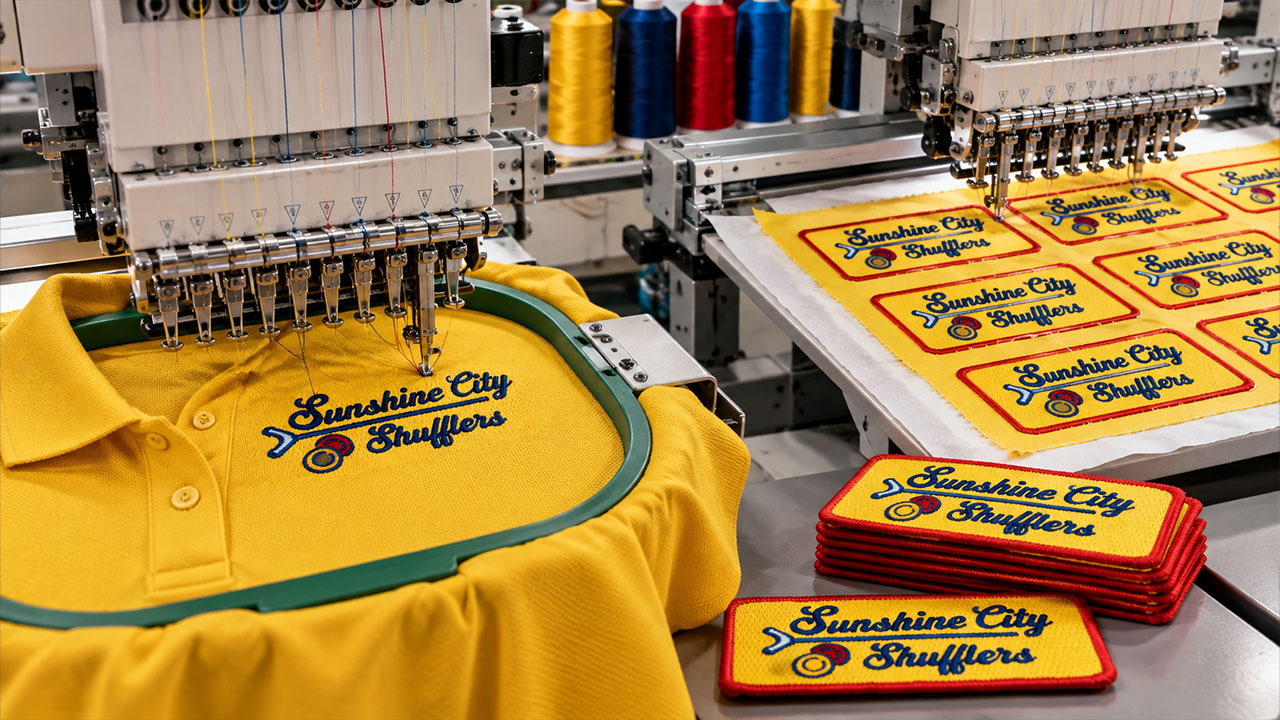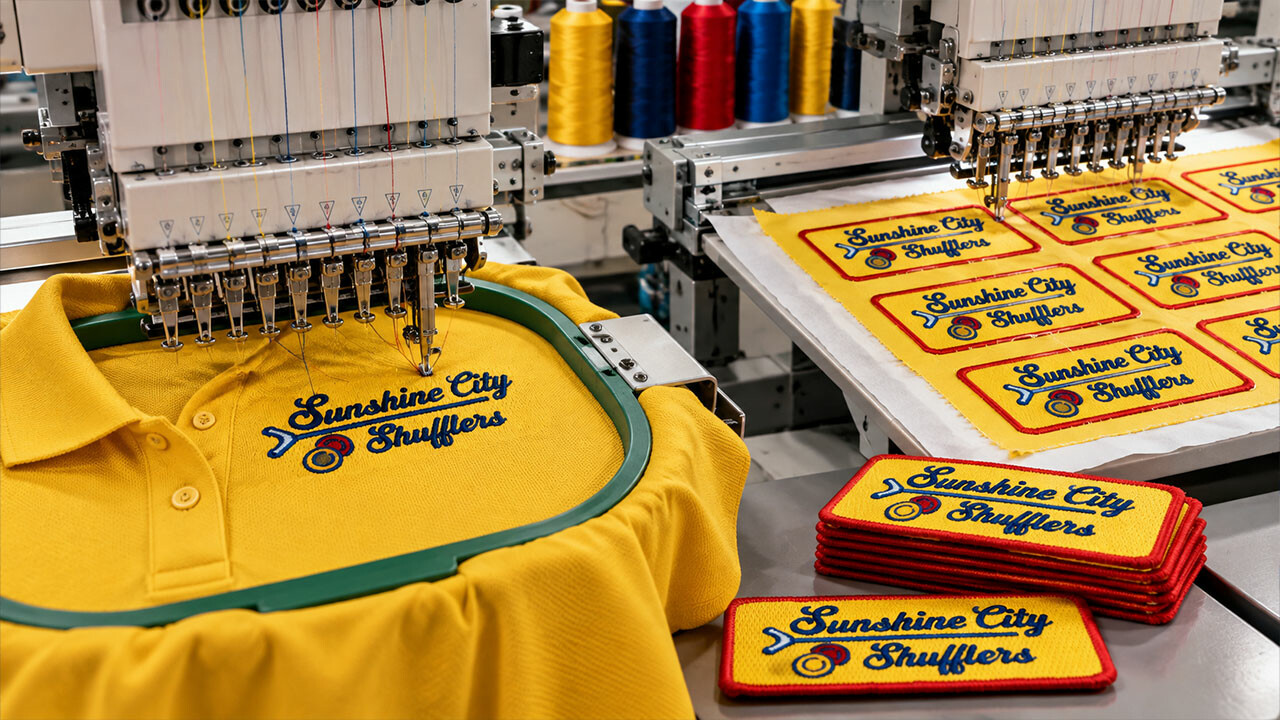

If you want to personalize work uniforms, jackets or other garments, you have a choice of embroidering your design directly onto them or using custom embroidered patches. Choosing which to use depends on your specific use needs, budget and time constraints. Let’s explore the pros and cons of each method.
The Basics
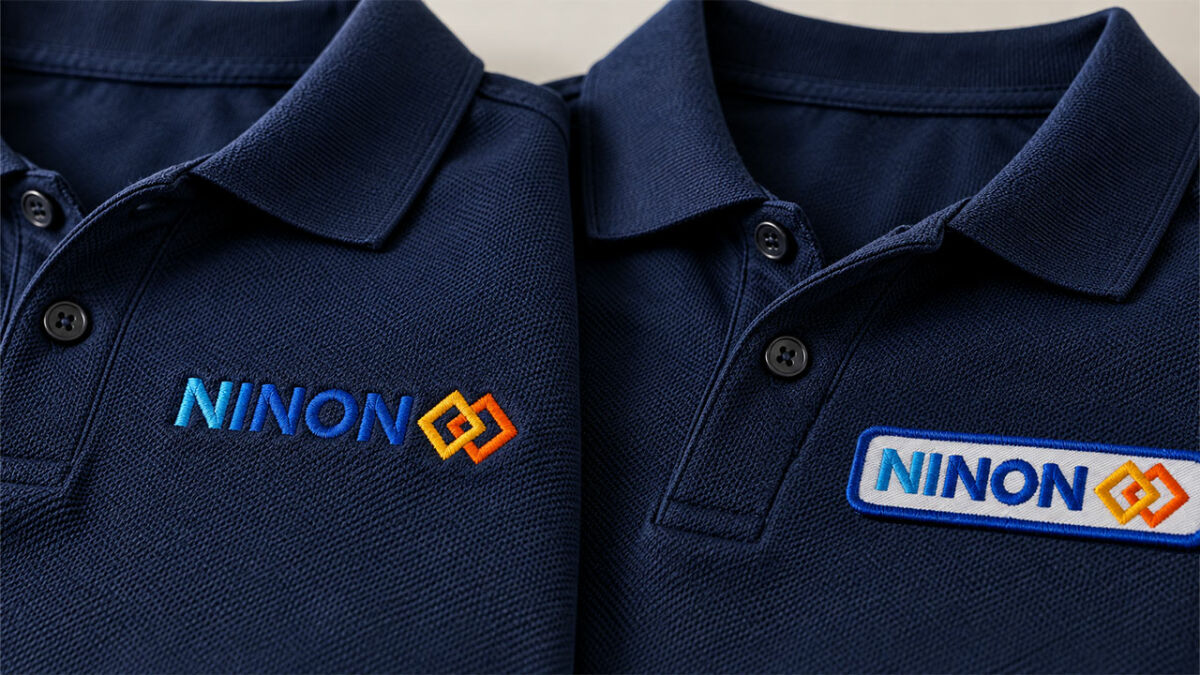
To be clear, “direct embroidery” means a design embroidered onto the garment itself, with no backing in between. In contrast, an embroidered patch is made on a separate piece of fabric backing (usually cotton twill) and can be attached to any garment later.
In both cases, everything begins with your design. You create the look you want and submit it to a provider. The provider translates the design into a code that a computer-controlled embroidery machine can read, a process called digitization.
Once the design is digitized, production can begin. For direct embroidery, that means putting the entire garment on the machine and positioning it appropriately. With patches, only the backing material goes on the machine.
Direct Embroidery
With direct embroidery, we stitch your design permanently onto the fabric. The machine stitches the thread through the garment one thread color at a time. Direct embroidery is what you most often see on designer branding, such as the classic Ralph Lauren polo player. It adds an extra touch of flair to a garment, one that many people consider more stylish than an embroidered patch.
Direct embroidery is particularly well-suited for company wear such as polos, tees or jackets, and for school uniforms.
Advantages
Permanence
If you want a design that absolutely will not come off the garment, direct embroidery is the way to go. Making the embroidery a part of the shirt, jacket or other item ensures it will last the life of the garment itself.
Control
You decide exactly where to place the design on your garments. You don’t have to worry about people attaching your brand in inappropriate locations, or sloppy attachment methods.
High End Look
Direct embroidery offers an integrated look that patches can’t quite match. Your design sits flush with the fabric, with no visible edge. It’s a premium look, as the brands such as Ralph Lauren and Izod expect. If you want a professional look for company wear, it’s the way to go.
Disadvantages
Permanence
It might seem strange to see this listed as a disadvantage, but it’s true. In the event the design gets damaged, there’s no way to replace the design without replacing the entire garment. Conversely, if the garment gets damaged, it’s impossible to remove the design and attach it to a new garment.
Slower Production
Production times can vary depending on order sizes, factory backlogs and other factors, but generally speaking, direct embroidery takes a bit longer to produce than embroidered patches. That can be a problem if you have a tight deadline requirement.
Limited Fabric Options
Direct embroidery isn’t compatible with all fabric types. It works well with woven fabrics such as cotton, denim and polyester. Vinyl, leather and thin fabrics are less suitable, and are likely to do better with embroidered patches.
Size
With direct embroidery, the available space on the garment determines the maximum size of the patch. It can be limiting if you prefer a larger design.
Embroidered Patches
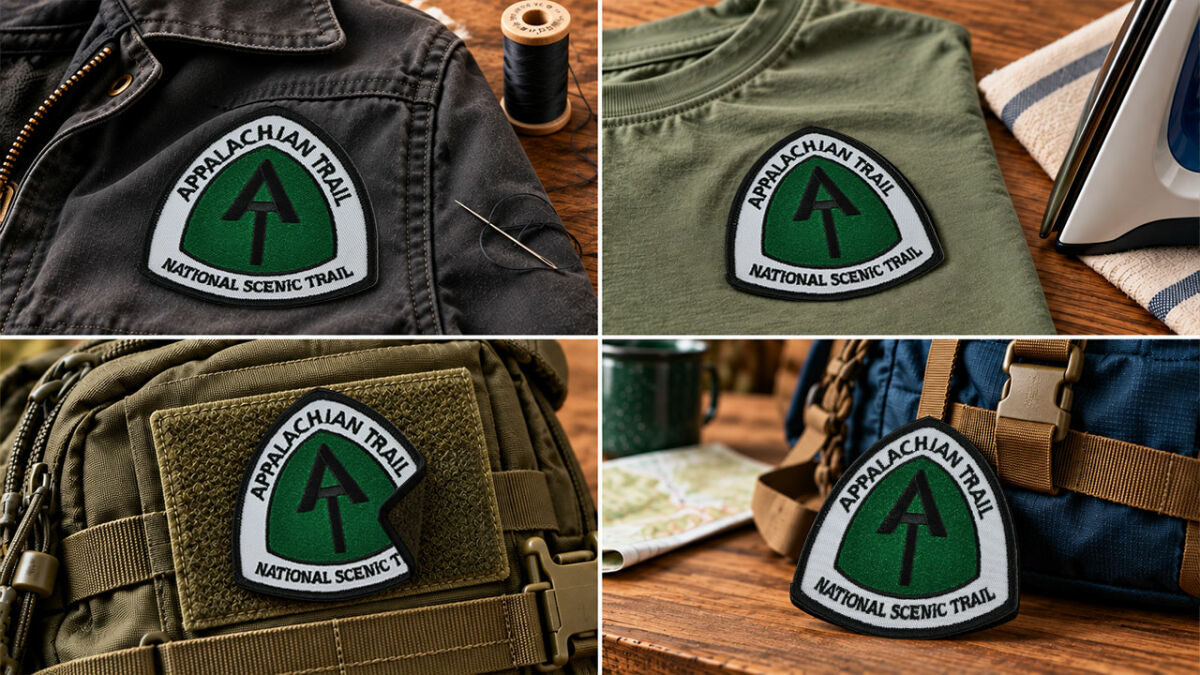
Custom patches stitch your design, with high-quality thread, onto a twill backing. The recipients can attach the patches to their garments using a variety of attachment methods, choosing the one that best suits their needs.
Advantages of Patches
Flexibility
Patches give you a greater degree of flexibility when it comes to the size, placement and permanence of your design. You can incorporate larger designs such as jacket back patches, or place patches virtually anywhere you want on a garment.
Attachment Options
You can choose how to attach patches to garments, depending how permanent you want them to be, whether you want to transfer them between garments and your sewing skill level.
Sew-On
Sew-on patches give you a permanent, solid attachment to the garment, one that will last as long as the garment itself. It requires minimal skill with hand- or machine-sewing.
Iron-On
Iron-on patches simplify the attachment process, enabling you to securely attach patches without having to sew. However, it’s not suitable for every fabric.
Velcro®
Velcro hook-and-loop fasteners allow you to quickly attach or remove patches, and transfer them between different garments. These are ideal for military and tactical patches.
Customization
It’s easy to create custom patch shapes, and with either flat or raised borders. These can clearly represent your brand or logo, and draw attention.
Experimentation
Patches give you the opportunity to experiment with more than one design. When you find one that you prefer and your logo is fixed, you can switch to direct embroidery instead of patches later.
Collectability
Patch collecting is a popular hobby for many. Organizations such as police and fire departments often trade patches among departments. Others enjoy collecting unique designs from teams, businesses, and other organizations to display.
Disadvantages
Control
While patches enable you to distribute your design widely, such as at trade shows and conferences, you have no control over what happens to them after they leave your hands. Attendees might choose to attach them badly, or worse, just toss them after the event.
Design Issues
There’s no question that embroidered patches can look just as good as direct embroidery, but it takes planning. Too much information or too small a font can make your message illegible. Your patch provider can help you find the right size for your needs.
A “Lesser” Look?
For some, a direct embroidered logo indicates a more high-end appearance. Patches feature their own style and bring their own value to the table, which many companies, schools and other organizations recognize and appreciate.
The Choice Is Yours
Both direct embroidery and embroidered patches have their place. While Patches 4 Less is a patch provider, our parent company also provides direct embroidered apparel, so we can advise which one fits your needs. Want to find out more? Call us at (866) 847-2824, and we’ll be glad to help.